Deutsch
 English

"Just as in human teams, building mutual trust between humans and robots is a challenge" (Full article here)
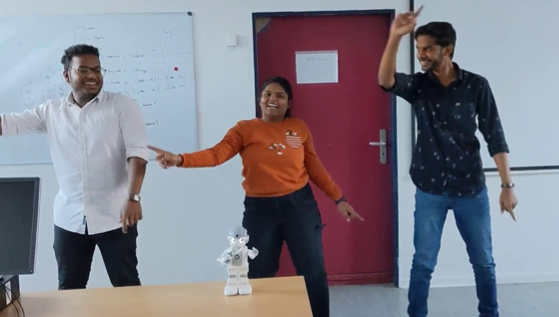
In our Human-AI and Human-Robot Interaction Lab, we study the interaction between humans and artificial intelligence through application areas such as human-robot interaction and technologies like chatbots. We examine how humans can interact with AI-based agents and what effects this has on work, learning, and collaboration.
Our work is guided by the concept of “Human-Centered AI” (Riedl 2019) proposed by Riedl (2019). With this paradigm, artificial intelligence mechanisms are designed with the awareness that they are part of a larger (socio-technical) system. Artificial intelligence and robotics must therefore both understand the sociocultural aspects of human behavior and be comprehensible and transparent to the people who interact with them.
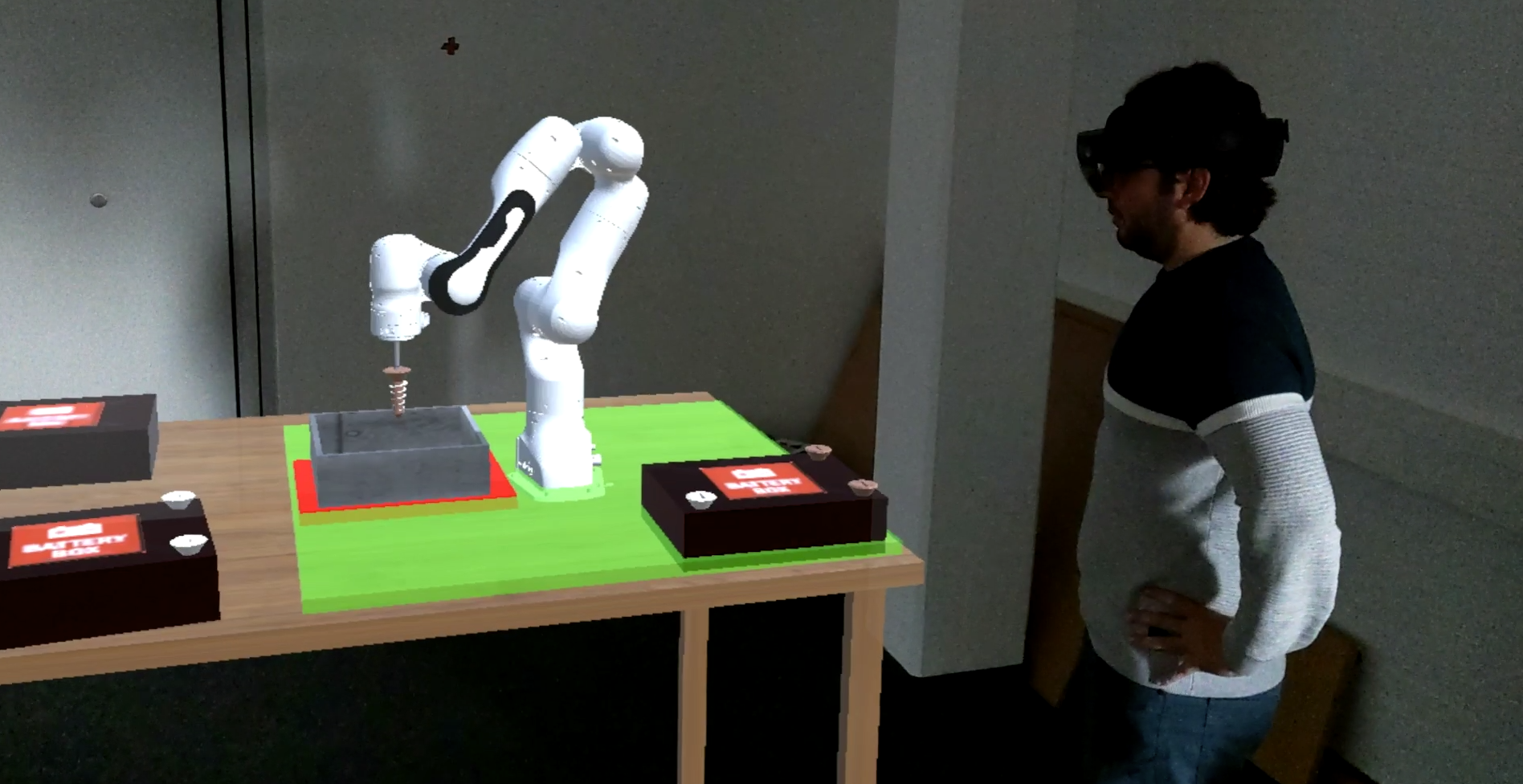
In human-robot interaction, we use this paradigm to investigate, among other things, how humans and robots can function as a team and work together to complete tasks. Our research questions include the application of findings from cooperation research—such as those related to trust-building—as well as the design of reciprocal human-machine interaction.
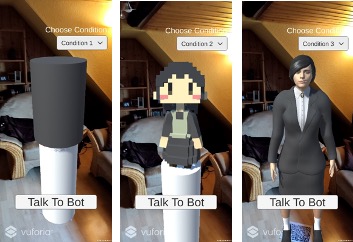
In the field of chatbot technology, we are exploring how chatbots can be designed as collaborative partners, in line with the concept of human-centered artificial intelligence. To this end, we are working on questions such as how and whether chatbots should be visualized, how emotion recognition can improve interaction with chatbots, and how control can be transferred between humans and chatbots when performing tasks.