
 Deutsch
 English

2024
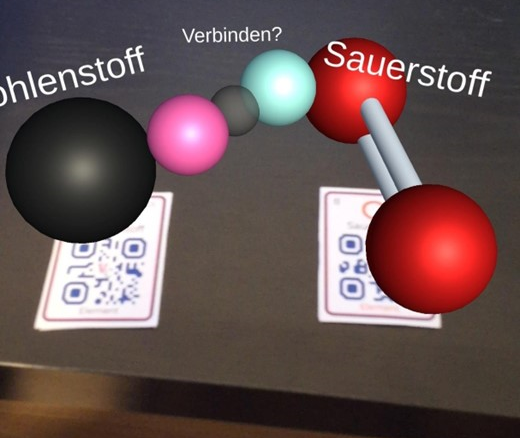
This thesis examined the potential of augmented reality (AR) to support chemistry instruction at the secondary school level. The focus was on the AR-based learning application “Virtual Chemist,” which makes complex chemical concepts such as bonds and reactions tangible through three-dimensional visualizations.
Using a mixed-methods approach—consisting of usability tests, classroom observations, and interviews with students and teachers—it was demonstrated that the app significantly increases motivation and enjoyment of learning. Users found the application intuitive, clear, and helpful in understanding abstract content.
This study demonstrates how innovative technologies such as AR can make a lasting contribution to educational quality—especially in challenging subjects like chemistry.
2023
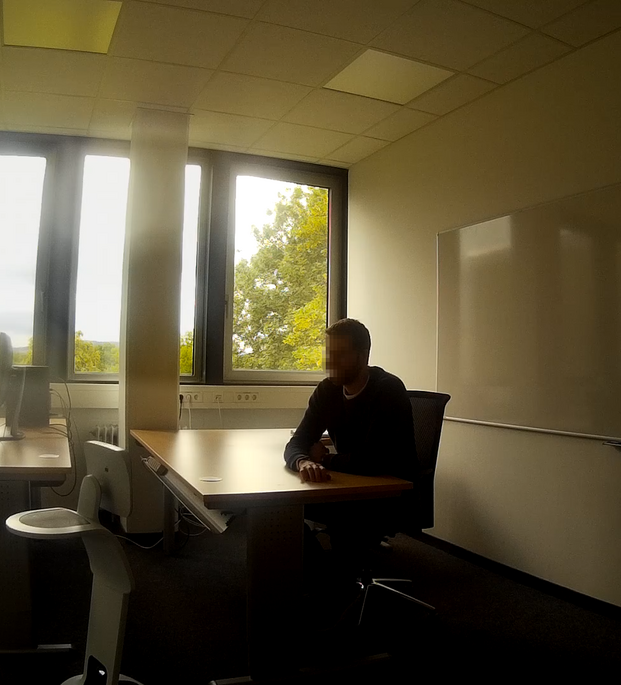
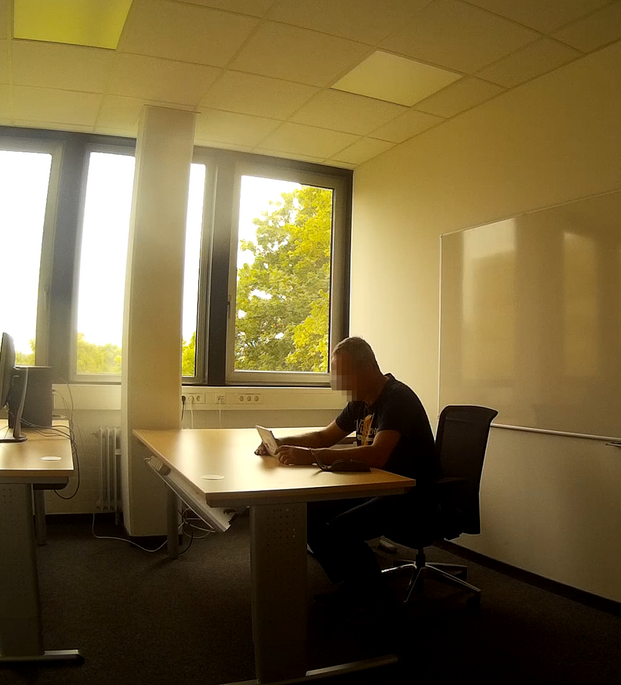
This thesis explores the potential of video consultations in local medical settings as a solution to the anticipated shortage of physicians in rural areas in Germany. A user study involving 23 participants was conducted to evaluate two devices—a tablet and a telepresence robot—from the patient's perspective. Valid data from 18 participants were collected through questionnaires, interviews, and video recordings. The study assessed the usability, interaction quality, and user perception of both devices. Results indicate that while the telepresence robot enables better spatial navigation and offers a more face-to-face-like interaction with the physician, participants often found its behavior difficult to interpret. In contrast, the tablet was perceived as more familiar and easier to use. Despite the overall suitability of both devices for video consultations in medical settings, some participants questioned the added value of such consultations compared to those conducted at home, primarily due to the low perceived level of service.
2020
As part of the ARBay project, this research track evaluated AR-based support for remote consultations. The study compared four different user environments for the remote assistant, using a combination of video and 2D/3D textured models with both fixed and free perspectives. The video shows the study’s design and evaluation.
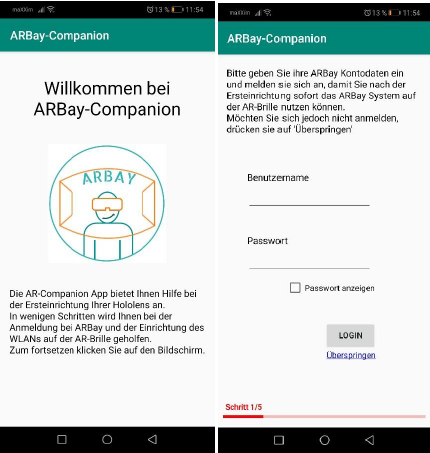
As part of this project, an application was developed that sets up the Wi-Fi on smart glasses using a smartphone. To ensure that smart glasses can make everyday life easier in the future, a simple setup process—particularly for the internet—must be guaranteed. To this end, the current setup process is analyzed, and methods are identified to simplify the setup. An application was developed that allows the Wi-Fi of smart glasses to be set up using a smartphone. In addition, a feature was implemented to log in directly to an existing system, such as the ARBAY system used in this thesis. Subsequently, an evaluation was conducted to determine how the application can be improved for future use.
This master’s thesis examined augmented reality-supported furniture sales consultations conducted over the Internet. For such a consultation, it may be advantageous for the consultant to be displayed as virtual content to the customer alongside the furniture. This master’s thesis examined the extent to which the appearance of such a consultant representation—a 3D “avatar”—influences the customer’s perceived trust in the consultant, as well as the customer’s perceived social presence and overall satisfaction with the consultation. In addition, the study examined the extent to which the dynamics of the avatar’s movements affect these same aspects. Regarding the appearance of the consultant avatar, life-size avatars were compared with miniature avatars. For the dynamics of the advisor avatar, avatars were implemented that directly mimic the camera movements of the advisor operating via the internet by adjusting their own line of sight and position in the client’s room accordingly. These were compared with avatars that remain in their starting position throughout the entire consultation and maintain eye contact with the client whenever possible.
2019
This research project was conducted as part of the “ARBay” project and aimed to re-evaluate interaction mechanisms already identified in existing research within expert-worker support scenarios in the context of remote consulting sessions. Using a prototype developed for this purpose, various methods were tested to allow consultants to view the environment of a client wearing augmented reality glasses via a PC. In addition, various perspectives from which the consultant can place virtual pieces of furniture in the customer’s environment were evaluated. The video shown here demonstrates each of these pointing and placement methods.
2018
This bachelor's thesis examines the extent to which augmented reality applications can supplement or replace traditional instructions and presentations. To this end, a system was developed for the Microsoft HoloLens that automatically detects 2D images/text and 3D objects in the environment, highlights them, and displays additional content, such as descriptions or 3D models, alongside them.
This bachelor's thesis developed a concept and a prototype in the form of an Android app to track the shelf life of food and thereby prevent food waste. To this end, various features were implemented, such as scanning receipts and suggesting recipes to use up existing food.
As part of this master's thesis, a suitable authentication method and an access management system for virtual objects in augmented reality (AR) were developed and implemented using the HoloLens as a case study. To this end, two different mechanisms were implemented and tested:
a Circle-PIN method in which a PIN code can be entered using head movements and a circular arrangement of digits.
A so-called Picture-Points method, in which authentication is performed by selecting predefined image points.
In addition, a rights management system was integrated into the aforementioned project, through which the visibility of virtual objects can be managed. This allows read and write permissions to be granted or revoked for registered users. The focus of the access management development was on designing a graphical user interface suitable for the HoloLens
As part of this project, an augmented reality application was developed for the Microsoft HoloLens that enables the creation and use of virtual manuals for technical products. Using this application, a prototype virtual manual for assembling an XY plotter was developed.
2017
As part of Timo Kunzendorff’s master’s thesis, titled “Design and Development of Realistic Learning Scenarios Using Augmented Reality,” an application was developed for the Microsoft HoloLens to support learners in continuing education and professional development within the specific field of nursing. Among other things, marker recognition was used to depict medical procedures in a context as realistic as possible and to guide learners based on these depictions. The resulting prototype is designed so that it can be expanded to include additional use cases.
Timo Giese's bachelor's thesis addresses the topic "The Use of 3D Tracking in Augmented Reality: The Case of a 3D Track for Video Tutorials." In his thesis, he explores the possibility of enriching videos (e.g., instructional videos) with an additional 3D track on a Microsoft HoloLens. This is intended to provide the viewer with a better understanding of the objects in the video. The objects are virtually represented in real time on the Microsoft HoloLens in a virtual display. The virtual display on the Microsoft HoloLens behaves in sync with the representation of the object in the video. If the object in the video is rotated, for example to show or explain a specific aspect, the virtual object on the Microsoft HoloLens is simultaneously moved in the same direction. This is intended to support understanding in educational videos.
In this bachelor's thesis by Arno Carstens, titled "Display of AR Content in Visible Frames," the capabilities of the HoloLens for recognizing and annotating objects were investigated. Specifically, the goal was to recognize frames and their associated QR codes in order to display relevant content. The algorithm for frame recognition was developed in-house for this purpose. The results of this thesis can be used to better recognize various objects in the real world and display information about them.
As part of Niklas Osmers’ bachelor’s thesis, titled “Development of an AR-based collaborative drawing tool for drawing on snapshots of the environment,” an application was developed for the Microsoft HoloLens that allows users to draw (collaboratively) in augmented space and share these drawings with others. This functionality was tested in a user study in which participants were asked to explain the concept of central perspective with vanishing points to one another. Participants had the opportunity to create drawings on the Microsoft HoloLens and share them with others to illustrate the concept.